The Answer 500 Authors Keep Giving
“The show started as a way for me to prove that I can get a stranger to tell me their story. And 500 episodes later, I think strangers have taught me more about mine.”— Mike Carlon
About This Episode
For the 500th episode, Mike turns the microphone on himself. He goes back to 2011, when he was a brand-new focus group moderator who started a podcast because he couldn't show clients his proprietary work, and to the publicist who told him to make the show about authors. From there he walks through what 500 conversations have taught him: where writing careers really begin, why there's no such thing as an overnight success, and why it's never too late to start. He also gets personal about losing his brother Greg and his mother a year and a month apart, how writing carried him through it, and the 3 a.m. "download" that became The Waiting Room. And he finally answers the question he's asked every guest: what would you whisper to your younger self?
Key Takeaways
- Most writing careers start with a grown-up who noticed. When Mike asks guests where their story as an author begins, he expects book deals and hears about childhood instead. April Henry mailed a story to Roald Dahl at nine, and he wrote back. Kara Ruda's school librarian laminated her first little book and put it on the shelf. If you're a parent, teacher or librarian, what you did for a kid decades ago may be chapter one of their career.
- There are no overnight successes. In 500 episodes, Mike has yet to meet a guest who had no turbulence on the road to publication. April Henry's fourth book sold in three days, after nine years of trying. Camille Di Maio's debut took four years, 43 rejections and 17 drafts. And as K Smith Blum put it, better rejections are still progress.
- It's never too late. Some of Mike's most moving conversations are with people who found their voice in their 60s and 70s, after retiring, raising kids or a career that had nothing to do with books. Iris Mittlin Lav decided to write at 72. If you've been sitting on a story because you think the window has closed, 500 episodes say otherwise.
- Everyone is creative. Mike dreaded art class even more than gym, and spent years believing creativity meant crayons and talent he didn't have. Zara Marielle changed that: everyone has something inside them worth nurturing; some people have just been taught it isn't valuable. Nine books later, Mike agrees.
- Write from the scar, not the wound. Memoirists Mike interviews nearly always describe writing their hardest chapter as cathartic. The ones who tell the hardest stories well tend to wait until the wound has scarred over. And not everything has to be published: therapist Lauren Tettenbaum tells clients to write it all down, curse words included, and just not hit send.
- Grief is the price of love, and fiction can heal too. Mike talks openly about losing his brother Greg to lung cancer and his mother a year and a month later. Writing didn't end the grief, but it helped, and he's come to believe that's as true for fiction as for memoir. Stacey Bass gave him the line he still uses: grief is the price of love.
- Sometimes the story comes through you. Sick in a guest bedroom at 3 a.m. one Christmas, Mike started getting "downloads" of a story he had no plan to write. It became The Waiting Room, his most successful book, and only when writing the back cover did he notice his characters were Mary and Joseph, at Holy Family Hospital, on Christmas Eve. Other guests describe the same experience, and it's changed how he thinks of writing: some days it's closer to prayer.
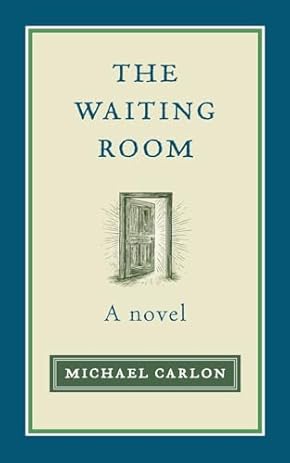
The Waiting Room
A moving story inspired by personal loss, family, and the mystery of what comes next. The Waiting Room explores end-of-life issues, family dynamics, and life lessons with humor and heart. Published by Uncorking a Story Publishing · May 27, 2025 · ISBN 9781732184695.
Listen & Subscribe
More conversations
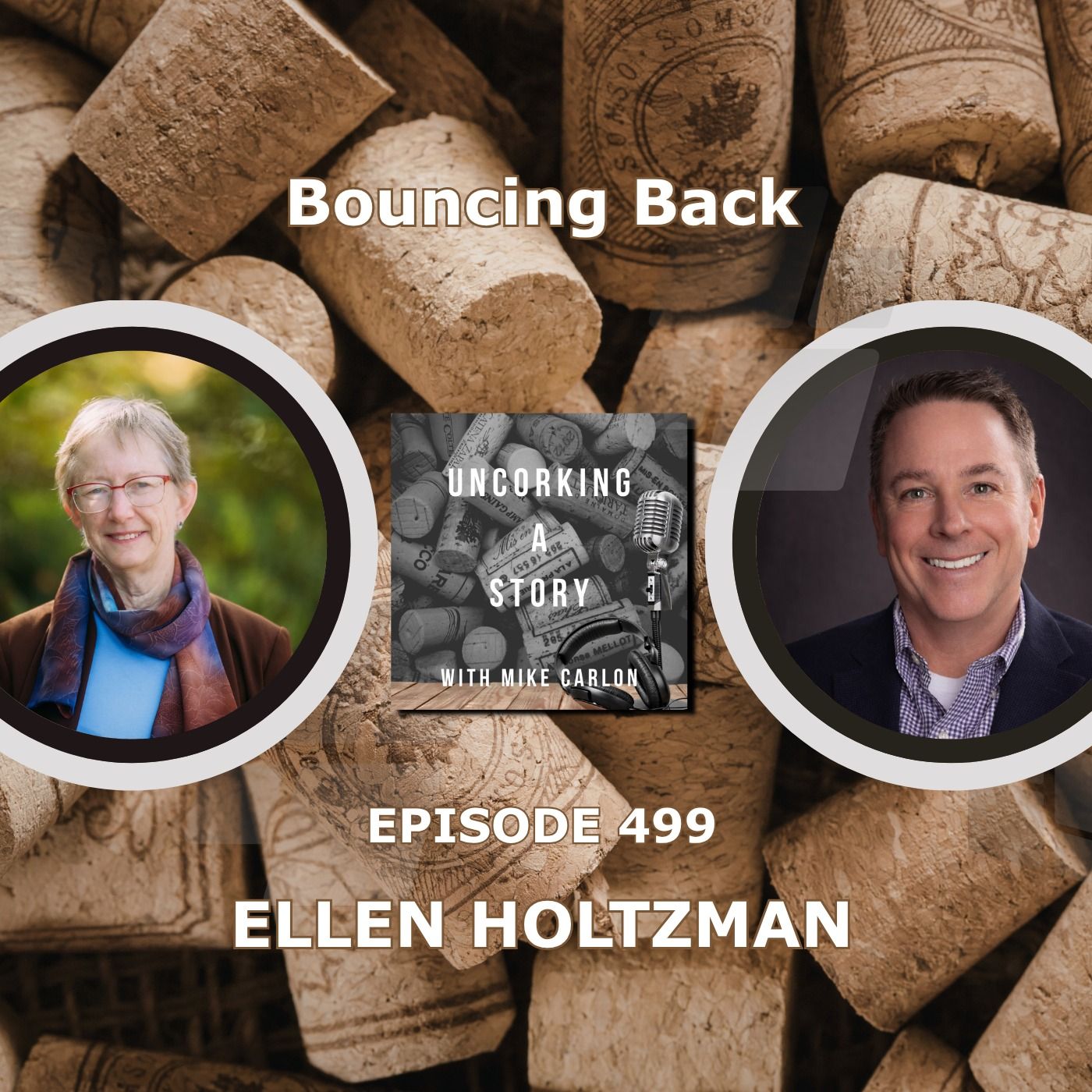
Bouncing Back
Ellen Holtzman on her award-winning debut Bouncing Back, teaching herself to write, why you can't tell the story while you're still in the wound, and how women lose and find themselves in marriage and divorce.
Listen →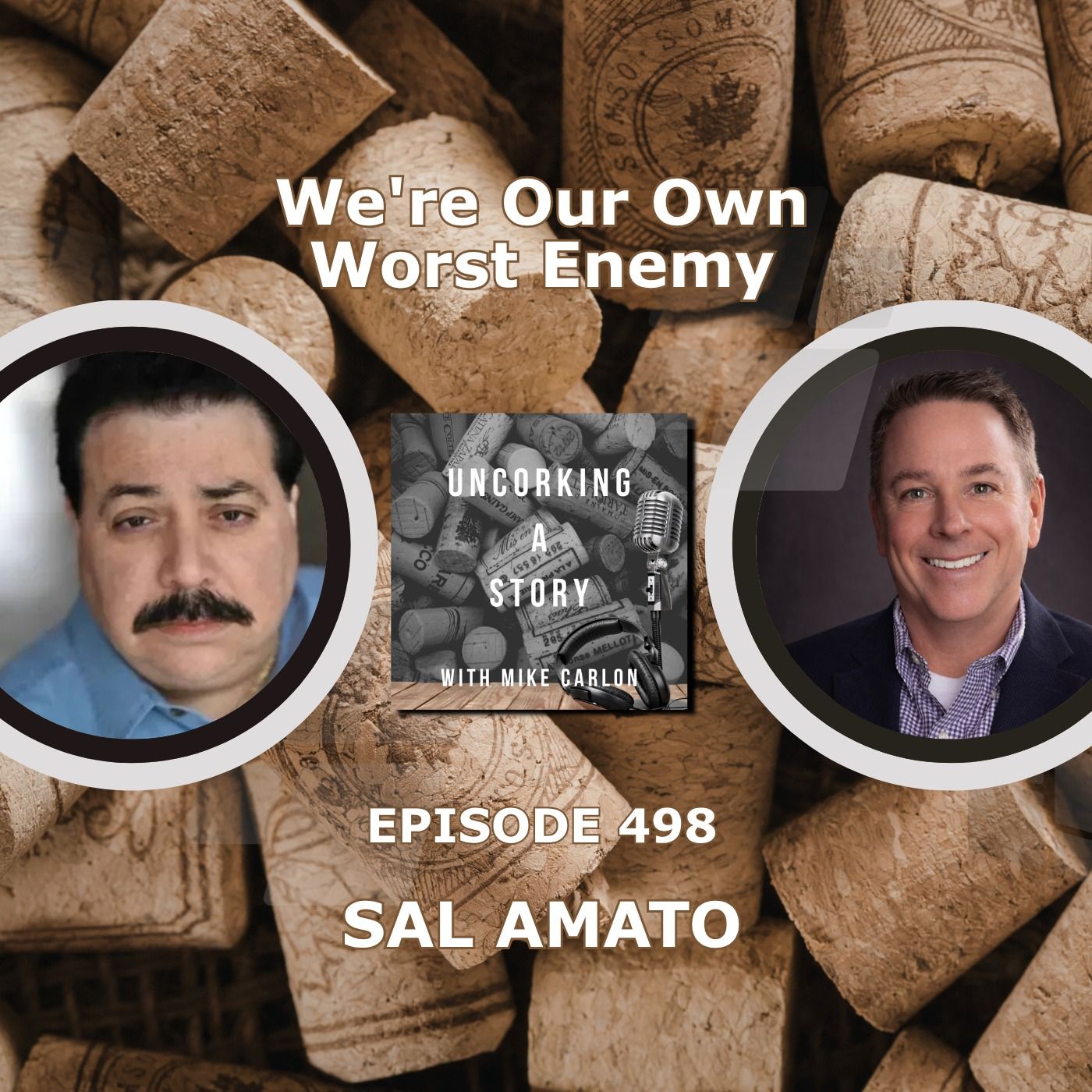
We're Our Own Worst Enemy
Sal Amato on his debut political sci-fi thriller Hidden Powers: Disclosure From Within, the alleged 1954 Eisenhower UFO meeting, tribalism and algorithms, and how Second City improv shaped his writing.
Listen →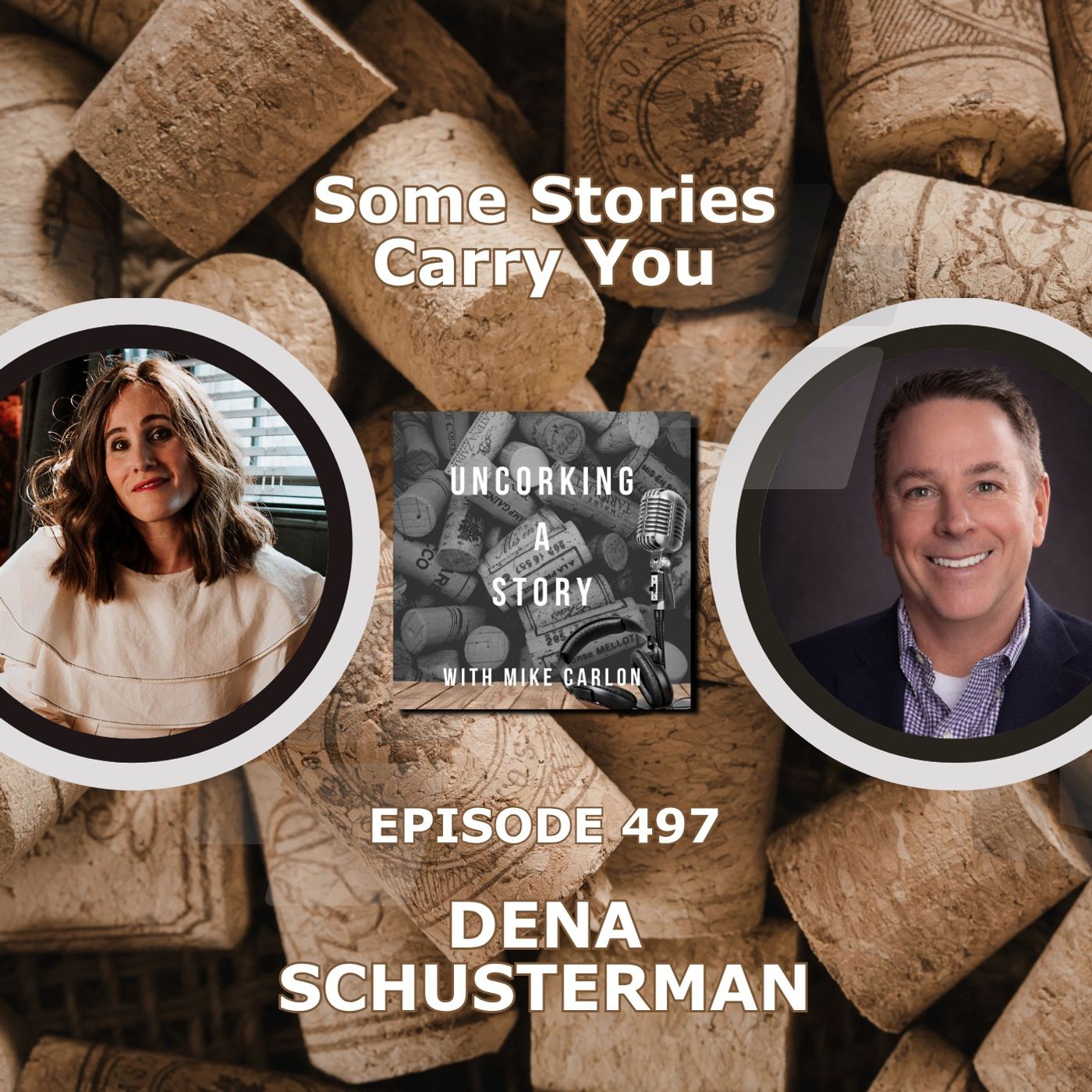
Some Stories Carry You
Dena Schusterman on reclaiming her father's stories, why you can't write someone else's memoir, tracing an inherited coping mechanism back four generations, and treating every rejection as proof she was closer to a yes.
Listen →