Bouncing Back
“It's confusing, it's awful, it's terrible, but you can survive it and you could actually have an even better life than you ever imagined.”— Ellen Holtzman
About This Episode
Ellen Holtzman didn't grow up writing. She was a history graduate student who taught herself to write by working through The Elements of Style page by page. When her husband decided he didn't want children, and then that he didn't want the marriage, her plans for an academic career fell apart along with it. She couldn't find a tenure-track job and had to support herself, so she went back to school for a second doctorate and became a psychotherapist. Years later, after her son left for college, she took writing courses at Grub Street in Boston. There she learned to tell stories instead of making arguments.
Bouncing Back weaves her own divorce together with the stories of two of her therapy clients: Lisa, fifty, whose husband of thirty years kept returning to an affair, and Megan, thirty, whose husband told her he didn't want a second child. Ellen tells all three stories twice, once as a memoirist living through it and once as a therapist asking what it all means. In this conversation she talks about why she couldn't have written the book in the first ten years, how women lose themselves in marriage, and the recurring dream that finally stopped once the book was done.
Key Takeaways
- Writing can be learned, even if you were never a "natural." Ellen says plainly that she wasn't a good writer and didn't always write. As a grad student she sat down with The Elements of Style and a grammar textbook and worked through a paper sentence by sentence, following it like a recipe. Later she learned story structure the same way, one course at a time.
- You can't write the story while you're still in the wound. Ellen believes that if she had tried to write the book within ten years of her divorce, it would have read like a journal: raw venting that no reader wants to sit through. Distance is what turns pain into a story someone else can use.
- Losing yourself in marriage often looks like accommodation, not abuse. Compromise is necessary, but Ellen sees many women become too accommodating, raised to please and unsure it's okay to be assertive. Her ex-husband went silent when he was angry, and she grew afraid to speak up or advocate for herself.
- If a couple can't argue well, the marriage is in trouble. Looking back, Ellen isn't surprised her husband walked out. He never told her what bothered him, so years of anger built up unspoken while she assumed everything was fine. Learning to disagree constructively is a skill most people never get taught.
- Surviving the "unsurvivable" becomes a lasting source of confidence. At the time, Ellen thought her life was over. Getting through it gave her something to look back on whenever something else felt impossible. She also saw many women come out of divorce feeling like a different person, with abilities they didn't know they had.
- Writing can heal what time alone doesn't. For decades Ellen had what she called her "divorce dream," in which someone was leaving her. After she wrote the book, the dream never came back. She believes working through the story in such detail finally dissolved the shock that years alone hadn't touched.
- Recovery is slow, and that's not a failure. Clients often ask Ellen why they aren't better yet. Her answer is that the confusion and pain are normal, grief takes time, and the process has lessons of its own. The book's purpose is to make readers feel understood, and to show them a good life is waiting on the other side.
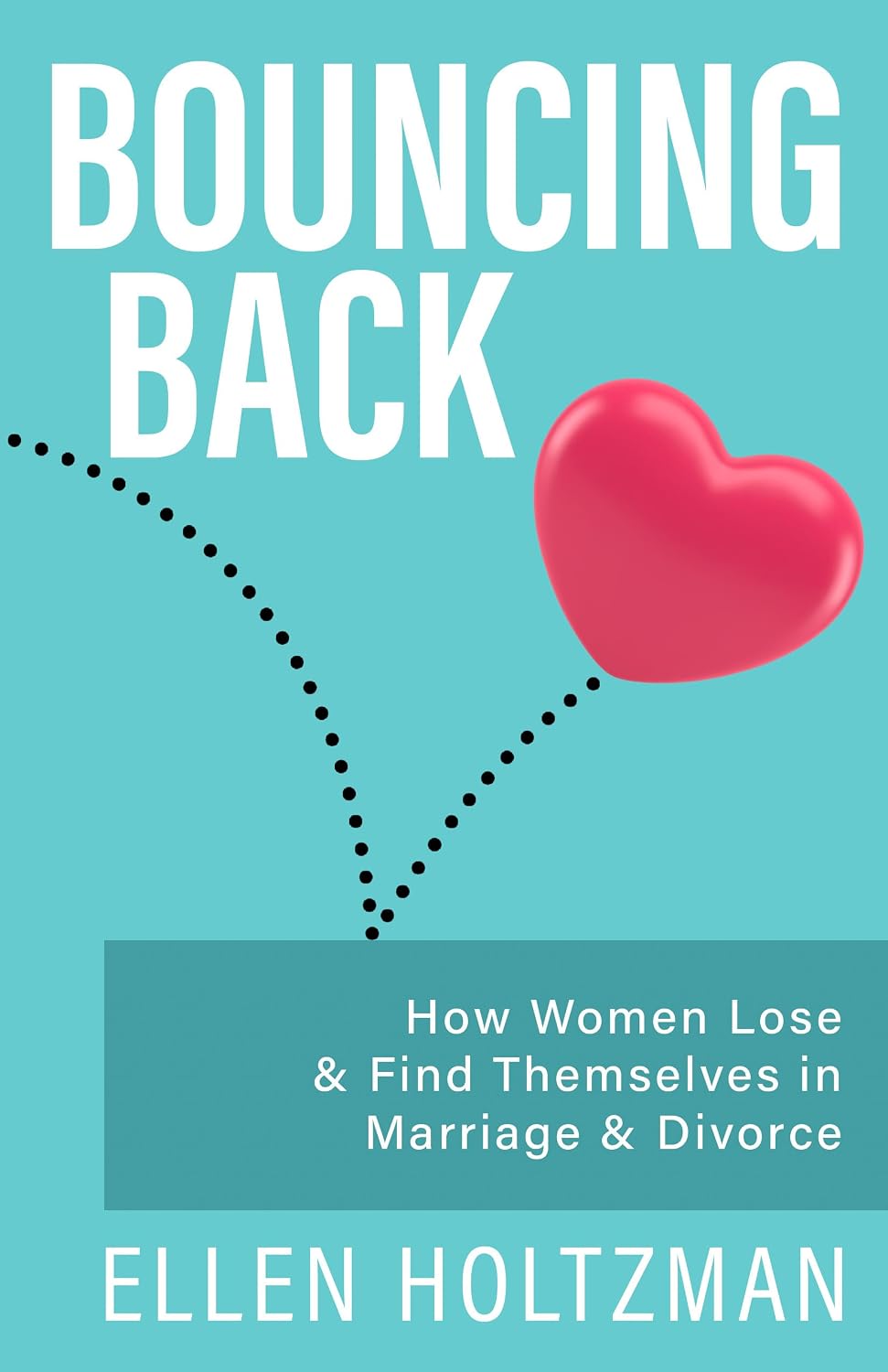
Bouncing Back
How Women Lose & Find Themselves in Marriage & Divorce. A psychotherapist weaves her own divorce together with the stories of two clients, telling each story twice — once as a memoirist and once as a therapist — in a 2024 Global Book Award winner about surviving the end of a marriage and building a better life.
More conversations
The Answer 500 Authors Keep Giving
For the 500th episode, Mike Carlon turns the mic on himself: where writing careers begin, why there are no overnight successes, grief, and the 3 a.m. download that became The Waiting Room.
Listen →
We're Our Own Worst Enemy
Sal Amato on his debut political sci-fi thriller Hidden Powers: Disclosure From Within, the alleged 1954 Eisenhower UFO meeting, tribalism and algorithms, and how Second City improv shaped his writing.
Listen →
Some Stories Carry You
Dena Schusterman on reclaiming her father's stories, why you can't write someone else's memoir, tracing an inherited coping mechanism back four generations, and treating every rejection as proof she was closer to a yes.
Listen →