The Man Who Invented the Medical Thriller
“If you want to know yourself a little bit better, writing a book is really a good way to do it.”— Robin Cook
About This Episode
Dr. Robin Cook — the man who invented the medical thriller — joins Mike to talk about his 41st novel, Bellevue, and a career that started in the most unlikely place: a nuclear submarine. Robin wrote his first book underwater during the Vietnam era, went on to publish 39 international bestsellers starting with Coma in 1977, and has never stopped finding new ways to keep readers on the edge of their seats.
In this conversation, they cover everything from how writing made him a better doctor, to why Bellevue marks a first in his career — the use of supernatural elements — to his mission to give patients the credit they deserve for the history of medicine. They also bond over the sad reality that fewer people are reading today.
Key Takeaways
- He wrote his first book on a nuclear submarine. Drafted during Vietnam, Robin found himself with eight free hours a day underwater — and decided it was finally time to keep the promise he'd made in medical school to write about medicine as it really is.
- Ignorance can be an advantage. Robin didn't know how hard it was to get published when he submitted his first manuscript. He thinks that naivety actually helped — if he'd known the odds, he might never have tried.
- Writing made him a better doctor. Constantly thinking about characters and characterization made Robin more curious about his patients as people — exactly the kind of empathy medical school tries to teach.
- Bellevue uses the supernatural for the first time. After 40 books grounded in medical realism, Robin felt the only way to tell this particular story — about giving patients credit for medical advances — was to venture into supernatural territory.
- Patients deserve credit for the history of medicine. The medical profession takes the glory, but none of it would have happened without the patients who suffered through it. That's the heart of Bellevue.
- Less people are reading today — and it's a real loss. Robin remembers a time when an entire plane seemed to be reading his book Fever. He sees the shift to phones as a cultural loss and hopes each new book can entice more people back to reading.
- Luck favors the person who keeps working. From working nights on the open heart surgery team to spending summers with Jacques Cousteau's crew to calling a high-ranking naval officer who remembered him — Robin's career is a masterclass in showing up and saying yes.
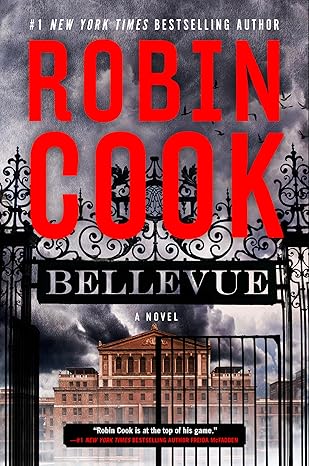
Bellevue
Connect with Robin
More conversations

Becoming Your Own Best Friend
Janice Erlbaum left home at 15 for New York City's shelter system. Twenty years after Girlbomb, she talks about owning her part of the story, the teachers who saw her, and why she tells everyone to keep writing it down.
Listen →
When Small Towns Censored Hollywood
Novelist Glenn R. Miller on the small-town ministers who once censored Hollywood's silent films, the family note cards that inspired his satire Rough Cuts, and why censorship is never black and white.
Listen →
Living Your Own Truth
Singer Machan Taylor, who toured with Pink Floyd and Sting, on the loneliness behind a glamorous life on the road, writing a memoir she never meant to write, and why holding the finished book finally let her let go.
Listen →