An Unquenchable Thirst
“I'm convinced that these experiences that we have, where we feel so alone, that there's a huge portion of the rest of the world who's feeling the exact same way at any given time. And it's so important to see those things reflected so that we just don't feel like there's something wrong with us.”— Anne H. Putnam
About This Episode
Anne H. Putnam is a writer, editor, and teacher with an unending interest in the stories that shape our humanity. Her first memoir, Navel Gazing: One Woman's Quest for a Size Normal, was published in the UK and Commonwealth after she wrote it as part of a master's degree in creative nonfiction — never imagining it would actually be published.
Her latest, Make Do and Mend: A Breakup Memoir, explores love, loss, and self-discovery with raw honesty and humor. It's the story of the end of her seven-year relationship and first engagement — a breakup that propelled her into therapy, across an ocean, and through a decade of emotional excavation before the book finally found its shape. After years of agents who loved it but couldn't figure out how to sell it, Anne chose to self-publish — and put serious investment into making the book indistinguishable from a traditionally published title.
Mike and Anne talk about backing into a publishing deal at 28, writing 200,000 words before finding the right 80,000, the courage (or compulsion) behind vulnerability on the page, pushing back on editorial feedback, the stigma of self-publishing, and why the compost pile is a writer's best friend.
Key Takeaways
- Nothing is wasted — it all goes on the compost pile. Every word you write that doesn't make it into the final book becomes fertile ground for what comes next. Anne wrote 200,000 words before landing on the 80,000 that became Make Do and Mend.
- Vulnerability isn't courage — it's compulsion. Anne doesn't experience sharing her story as brave. She has an unquenchable thirst for being understood, and memoir is the form that lets her explain herself fully. The vulnerability is the point, not the obstacle.
- Structure helps, but free-falling teaches you something too. Her first book was written in a master's program with deadlines, workshops, and authority figures. The second was just her, alone, for a decade. Both approaches produced books — but the unstructured path required far more trust in the process.
- You can push back on your editor. Anne's editor wanted her to be meaner about her ex. She resisted, choosing instead to present situations and let readers draw their own conclusions. Your name is on the cover — make choices you can stand by.
- Traditional publishing is driven by capitalism, not quality. Agents and editors loved Anne's work but didn't know how to package or market it. Once your writing clears the "good enough" bar, the rest is about what publishers feel is safe to sell — something outside your control.
- Self-publishing is a legitimate path. Anne invested in professional editing, a book coach, and a quality cover to ensure no reader would know the difference. The goal isn't sales volume — it's connection with readers who need the book.
- It counts. Borrowing from her swimming routine: if you got in the swimsuit, it counts. If you got to the parking lot, it counts. Building the routine — showing up — matters more than any single session's output, especially for writers with ADHD.
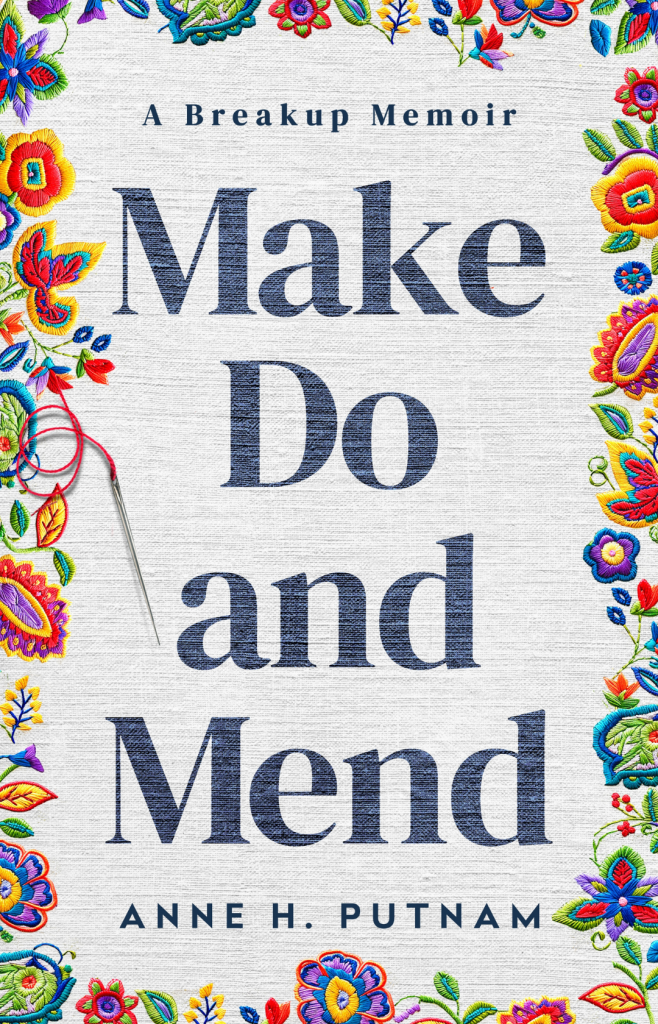
Make Do and Mend
Connect with Anne
More conversations
From Newsroom to Novelist
Former Wall Street Journal deputy editor-in-chief Neal Lipschutz on turning to fiction full-time after retirement, being edited after decades as an editor, and his new Scott Morgan suspense novel, Long Arm of the Past.
Listen →
The Answer 500 Authors Keep Giving
For the 500th episode, Mike Carlon turns the mic on himself: where writing careers begin, why there are no overnight successes, grief, and the 3 a.m. download that became The Waiting Room.
Listen →
Bouncing Back
Ellen Holtzman on her award-winning debut Bouncing Back, teaching herself to write, why you can't tell the story while you're still in the wound, and how women lose and find themselves in marriage and divorce.
Listen →